
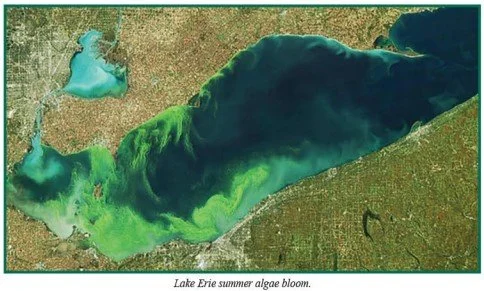
Agricultural literature published in the winter and spring of 2018 has been focused on the loss of fertilizer nutrients into the environment. For example, a publication entitled Ag retailers guide to crop nutrition 2018 which was a supplement to the publication of Crop Life contained various quotes describing the problems with fertilizer escapes.
1. "It will only be a matter of time until certain nutrients or nutrient amounts will be restricted. Fumigants are that way now, and the problem of nutrient run off and leaching is getting worse."
2. "Implementing the 4Rs alone isn't really going to make your yields the best they can be, and it's not going to keep all nutrients from moving to the streams. Growers and their consultants have also got to think about the health of that soil and if there are places where soil is leaving through erosion or the soil is degrading because the biology is shifting. Maybe the microbes aren't happy. I think that's where the retailer knows the soil and knows the fertilizer can really help the grower kick up their farm management."
Growers Chemical Corporation has been suggesting to farmers since 1955 that, by understanding soil health, the producer can lower the amount of applied plant nutrition (fertilizer) and still maintain a very economically competitive yield. By lowering the fertility inputs (fertilizer) the amount of those inputs (fertilizer) lost to the environment will be reduced significantly.
Any time the Growers Program is discussed, the agricultural establishment claims that a profitable crop cannot be raised with such a "dinky amount" of applied fertilizer. However, many issues of today's agricultural literature suggest that the amount of needed soil applied fertilizer may be less than once was believed, as is suggested by quote number 1.
Quote number 2 really goes to the heart of the matter when discussing the Growers Program. Growers Chemical Corporation has said since 1955 that once the soil is made healthy by the proper application of calcium (Ca), the soil microbiology can supply enough nutrients to the plant to grow an economically competitive crop for the crop's environment for that season. (Water and sunshine are still key elements in crop production.) The only time added crop nutrition or fertility is needed is when the soil microbiological force is under stress. This stress usually occurs at planting (cool) and at reproduction (hot and/or dry). Therefore, the best time to add crop nutrients is early in the season or during the heat of the season by putting the nutrients as close to the plant as possible through in Furrow technology or foliar application.
At Growers Chemical Corporation meetings in 1955, Dr. Tiedjens told agricultural producers they could control the cost of production by using the Growers Program. But, as a side light, he told farmers that the Growers Program was the best way to implement a sound environmental practice. Cost savings is very important in today's commodity climate, but environmental regulation could be even more important in the very near future.
This is an excerpt from the Early Fall Growers Solution (2018) written by Jim Halbeisen, Director of Research.
Signup for our newsletter to stay in the loop
