
Centennial Celebration
2019 was a year for the record books for many farming families and operations. For the Wedge family, it was especially notable as it celebrated its 100th anniversary under its fourth generation of family leadership.
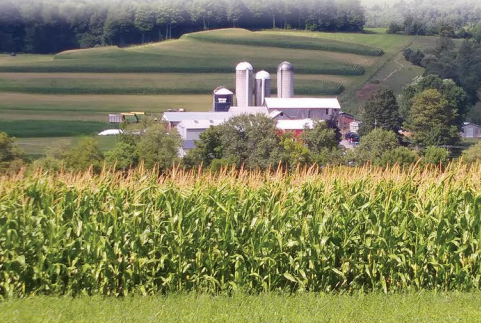
Harrison Homer Wedge was a native to the area and first settled onto the farm's still current location in Earlville, NY in 1919. He started the original dairy farm with a herd of twenty Holstein milk cows and 324 rolling acres. The original barn that was on the property when Harrison first bought the farm is still standing and in use today. It has undergone numerous upgrades and has had three major additions added onto it so far to accommodate growth.
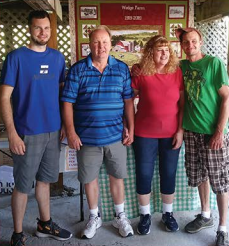
Lawrence N. Wedge, Sr. took over the dairy farm in 1949 as the second generation of family leadership. He grew up with three other brothers on the farm. He was drafted into serving in WWII from 1942-1945. He returned home to work on the farm for three years before buying a store in town. He successfully owned and operated that store in town before finally selling it and becoming the second generation of Wedges to own and operate the Wedge Farm. The dairy herd grew to 55 head under his leadership.
Lawrence N. "Nelson" Wedge, Jr. took to the helm of the operation in 1978 as its third generation of family leadership. The farm originally sold all its milk to Dairylea, but in the mid 1980s, that changed and is now sold to Madison Milk Producers Co-op in Oneida. He also saw the addition of five natural gas wells on the farm's acres in 2003.
Lawrence N. "Larry" Wedge, III took the reins of the operation in 2014 as the fourth generation of family leadership. Shortly thereafter, he transformed the dairy farm into Wedge Farm LLC as it operates today. It now covers 430 rolling acres and supports a 72-cow herd. Larry also has a brother, Dillon, who works off the farm but still comes and helps when needed.
Nelson is the one who gets credit for transitioning the farm from a conventional fertilizer program to the Growers Program after some talking with GMS Representative Jim Marland in 1995. Jim was able to highlight the areas of the Wedge Farm where GMS could be used, in the fields on all the forages and be mixed in the feed ration and fed directly. Nelson didn't have a sprayer at the time which was an obstacle in regard to foliar feeding the current alfalfa stands. Lucky for them, Jim's son Tim had a pickup with a sprayer mounted in the bed and could custom apply the GMS for them. With that, Nelson was on board to give it a try. Jim was also able to get Nelson to switch his lime sources to high calcium sources in the next year for both his bedding and soil needs.
What started in 1995 as a trial run has blossomed into a long multi-generational relationship. Nelson's son Larry is now running the farming operation, and Jim's son Tim is now their GMS Representative. The Wedges have owned their own sprayer for a few years now, and Tim is still applying GMS for other customers with the same Ag Chem pickup mounted sprayer he started out with new in 1992. However, he is on his third pickup truck.
The Wedge Farm operates a steady routine. Their all non-GMO crop rotation is corn and hay for their animals, with a little bit of pasture for the heifers and dry cows. All breeding is done artificially. GMS is foliar applied to the growing crops, both corn and hay, for quality and feed conversion. They don't mix any GMS in the TMR wagon since they have it in all the forages. However, any cows that are lacking a bit in milk production will get some additional GMS hand fed to them to keep them up. The crops will get yearly doses of manure from their own barn. They also use some high calcium lime in the bedding as well as bulk spreading some high calcium lime to the soil. Before they plant a new seeding of alfalfa, they treat the seed with GMS. This is helping them keep their alfalfa stands for six to seven years or more.
In 1997, when they went through a terrible drought, they didn't have to buy any extra hay that year. Their crops weren't spectacular, but they were good enough to keep the cows happy till the next season's crop. Many neighbors weren't so lucky. Many neighbors routinely comment on the Wedge's good hay production, especially that year. The Wedges are consistently getting four good cuttings yearly from their stands, while most of the neighbors are only getting three.
One particular year, Tim was called to come spray for an impending army worm invasion. When he pulled up with his sprayer, he could already see them marching across the road, out of the Wedge's field. He remembers driving back and forth on the road running over them. In the end, the army worms marched through the Wedge's field with little noticed damage; however, the neighbor's fields were destroyed.
The one caveat to growing such nice forages is the deer population know it. The herds of deer love the GMS grown crops and flock to them whenever they are hungry. The animals aren't the only ones that like the forages that the Wedges are growing. Their nutritionist does, too! He has been known to say, "I don't know how you do it, but your forage analyses are always higher than normal, and sometimes higher than the university claims they could be."
Congratulations on 100 years to the Wedge family, and here's to 100 more!
This is an excerpt from the Summer Growers Solution (2021) written by Zach Holmer.
Signup for our newsletter to stay in the loop
